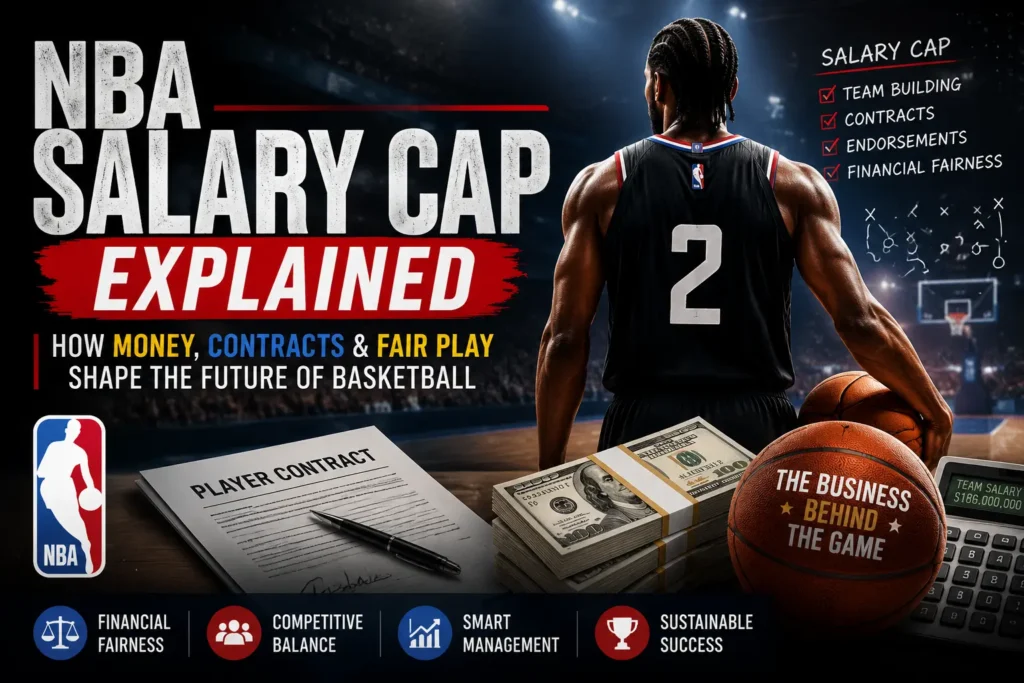
NBA Salary Cap Rules Explained: How Money, Contracts & Fair Play Shape Basketball
Basketball has always been a game of skill, teamwork, and strategy. Fans remember unforgettable moments — a championship-winning shot, a record-breaking performance, or a superstar carrying a team through the playoffs. But behind every successful NBA franchise, there is another game being played away from the court — the game of money, contracts, and financial strategy.
In today’s NBA, building a championship team is not only about finding talented players. Teams must carefully manage salaries, contracts, endorsements, and league regulations. The NBA salary cap system exists to make sure competition remains balanced and no franchise can simply spend unlimited money to dominate the league.
However, whenever superstar athletes, huge contracts, and business opportunities come together, questions about fairness often arise. Recent controversies involving teams and players have highlighted how complex the relationship between sports and money has become.
The investigation involving the Los Angeles Clippers and Kawhi Leonard became one such example, raising discussions about salary cap rules, endorsement agreements, and the importance of transparency in professional sports.
What Is the NBA Salary Cap and Why Was It Created?
The NBA salary cap is a financial rule that limits how much teams can spend on player salaries during a season. The purpose of this system is to create a level playing field among franchises.
Without a salary cap, wealthier teams could potentially spend unlimited amounts of money to sign every available superstar. Smaller-market teams with fewer financial resources would struggle to compete.
The salary cap encourages teams to focus on smart decision-making, including:
- Developing young talent
- Making strategic trades
- Managing long-term contracts
- Building balanced rosters
Instead of simply buying success, NBA franchises must create sustainable strategies to win championships.
The Modern NBA Is More Than Just Basketball
Superstar athletes today are not only players; they are global brands. Players generate income through multiple sources beyond their official team salaries.
These opportunities include:
- Sponsorship agreements
- Brand partnerships
- Merchandise deals
- Media appearances
- Business investments
A player earning money through legitimate endorsement deals is a normal part of modern sports. In fact, many athletes have successfully built business empires during and after their playing careers.
The challenge for sports leagues is ensuring that these opportunities remain genuine business agreements and are not used as hidden methods to provide additional benefits outside official contracts.
Why Endorsement Deals Can Become Controversial
An endorsement agreement usually involves a company paying an athlete to promote products or services. These partnerships are based on the athlete’s popularity, market value, and influence.
However, concerns arise when a player’s endorsement opportunity is connected to a team, team owner, or organization in a way that may influence competitive balance.
Sports leagues create financial rules because every advantage matters. A small financial benefit outside the official salary structure can potentially affect how teams attract and retain elite players.
This is why professional leagues investigate unusual financial relationships between teams, players, and businesses connected to those teams.
The Clippers and Kawhi Leonard Controversy: Why It Created Debate
The controversy surrounding the Los Angeles Clippers and Kawhi Leonard attracted significant attention because it involved one of basketball’s biggest stars and questions surrounding financial fairness.
The NBA investigation focused on whether certain business relationships connected to Leonard created benefits that could be considered outside normal salary cap regulations.
The situation created a larger conversation within basketball:
- How should teams manage relationships with superstar players?
- Where should leagues draw the line between business opportunities and competitive advantages?
- How can organizations maintain transparency?
Regardless of individual opinions about the case, the controversy demonstrated how carefully professional sports organizations must operate when dealing with high-value athletes.
Why Salary Cap Violations Matter in Professional Sports
Some fans may wonder why financial rules are taken so seriously when teams and players already generate billions of dollars.
The answer is simple: competitive fairness.
Professional sports depend on the belief that every team has a realistic opportunity to succeed. If financial rules are ignored, fans may question whether results are based purely on talent and strategy or influenced by financial advantages.
Salary cap violations can lead to serious consequences, including:
- Large financial penalties
- Loss of draft opportunities
- Damage to franchise reputation
- Restrictions on future operations
For a professional team, these penalties can impact years of planning and rebuilding.
How Financial Decisions Can Change a Franchise’s Future
Building an NBA championship team requires long-term planning. A single contract decision can affect a franchise for many years.
Teams must consider:
- Current performance
- Future salary flexibility
- Player development
- Draft opportunities
- Overall financial health
A franchise that ignores financial discipline may find itself unable to improve its roster in the future.
This is why NBA executives spend countless hours analyzing contracts, trades, and salary structures. Winning today is important, but sustainable success requires planning for tomorrow.
The Growing Role of Transparency in Sports
Modern sports organizations operate like major businesses. They have investors, global audiences, sponsorship partners, and millions of fans watching their decisions.
Because of this, transparency has become more important than ever.
Teams must ensure that their actions follow league rules and maintain public trust. A championship trophy may create excitement, but a damaged reputation can affect a franchise for years.
Strong organizations understand that success is not only measured by wins and losses. It is also measured by integrity, accountability, and responsible decision-making.
Lessons Every Sports Organization Can Learn
1. Rules Exist to Protect Competition
Financial regulations are not designed to stop teams from succeeding. They are designed to ensure that success comes through smart management and sporting excellence.
2. Transparency Builds Trust
Clear communication and ethical business practices help teams maintain credibility with fans and partners.
3. Superstar Management Requires Balance
Elite athletes bring enormous value to organizations, but managing those relationships requires careful planning and respect for league regulations.
4. Short-Term Gains Can Create Long-Term Problems
A decision that appears beneficial today can create significant challenges in the future if it damages reputation or limits flexibility.
The Future of Money and Basketball
As basketball continues to grow globally, the financial side of the sport will become even more complicated. Players will create larger personal brands, teams will explore new business opportunities, and leagues will continue adapting their regulations.
The challenge will always remain the same: allowing athletes and organizations to grow financially while protecting competitive fairness.
The NBA salary cap is not just a financial rule. It represents the balance between ambition, business, and equality in professional sports.
Conclusion: Basketball Is Played on the Court, But Built Behind the Scenes
The biggest moments in basketball happen during games, but the future of franchises is often decided in offices, negotiations, and financial planning meetings.
Cases like the Clippers and Kawhi Leonard controversy remind the sports world that money and competition are deeply connected. As professional basketball continues evolving into a global business, maintaining fairness and transparency will remain one of the biggest challenges for every organization.
Because at the highest level of sports, winning is not only about having the best players — it is also about building the right system around them.
For understanding official basketball rules, league updates, and how professional basketball organizations operate, readers can explore the NBA Official Website .
For more insights, analysis, and latest updates related to basketball, player performances, and major events from the world of the sport, readers can explore our basketball news and updates section.
Leave a Reply